If you’ve ever mixed a batch of topical analgesic cream, a liquid oral supplement, or even a tiny tablet core in a lab or production line, you’ve probably spent way too much time staring at a tray of wet material waiting for it to dry. I’m the head of product development and client relations at an ester solvents supplier that’s worked with pharma teams for 12 years, and I can tell you: the solvent you choose isn’t just a detail—it’s the difference between a batch that meets FDA drying specs and one that gets held up in quality control for days. For years, pharma manufacturers defaulted to old standbys like ethyl alcohol or acetone, but ester solvents have quietly changed the game for drying times—and not just because they evaporate fast. Let’s break down how this works, and why it matters for your bottom line. Ester Solvents
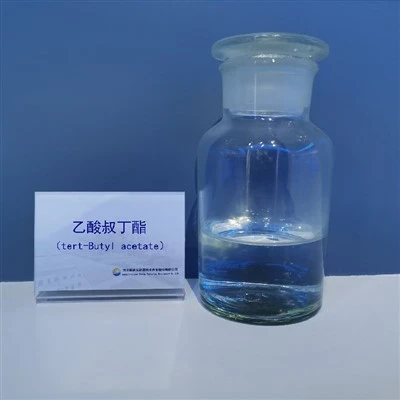
First, I need to ground this in basic science that our pharma clients don’t just have to take for granted. Drying in pharma isn’t the same as letting a bottle of nail polish air out on a counter. For a wet granulation batch, for example, you have a mix of active pharmaceutical ingredient (API), excipients, and solvent that’s been mixed and formed into granules—those granules have tiny, porous surfaces, and the solvent is trapped both on the surface and in those pores. For a topical patch, the solvent is carrying API through a polymer matrix, and it has to evaporate evenly without leaving bubbles or distorting the layer. The key factor here is vapor pressure, right? Vapor pressure is the measure of how much a solvent wants to turn from liquid to gas at a given temperature and pressure. Higher vapor pressure means faster evaporation, which sounds like it would make esters the obvious choice—wait, but it’s not that simple. Not all esters are created equal, and their performance depends on how you’re using them.
Let’s start with the most common ester solvent we supply: ethyl acetate. This is the workhorse of our pharma line, and for good reason. Ethyl acetate has a vapor pressure of around 73 mmHg at 20°C (room temperature), which is double that of ethyl alcohol (around 45 mmHg at the same temp) and way higher than acetone, which is around 185 mmHg. Wait, hold on—acetone has higher vapor pressure, so why isn’t everyone using acetone? Because acetone’s evaporation is too fast. If you use acetone in wet granulation, the solvent evaporates before the granule can form properly, leading to uneven granule sizes and a sticky finish that takes twice as long to dry once it’s stuck to the tray. Ethyl acetate strikes a balance: it’s volatile enough to move out of those tiny pores in granules, but slow enough that it doesn’t evaporate too quickly mid-process. I remember a client in New Jersey that made over-the-counter allergy tablets a few years back—they were using ethanol and taking 18 hours to dry each granulation batch, which tied up two of their three production lines and cost them $12,000 a day in downtime alone. They switched to a blended ester solvent we formulated, and their drying time dropped to 7 hours. That’s not a small win.
But vapor pressure isn’t the only piece of the puzzle. Let’s talk about boiling point. For a lot of pharma drying, especially in vacuum drying or spray drying, you’re not working at room temperature—you might be heating batches to speed things up, and here’s where ester solvents’ boiling points matter. Ethyl acetate has a boiling point of 77°C, which is lower than ethanol (78°C—wow, almost the same) and way lower than, say, isopropyl alcohol (82°C). Wait, but methyl acetate has a boiling point of 57°C, which is even lower. But methyl acetate is more prone to residual solvent issues, right? The ICH Q3C guidelines set strict limits on residual solvents in pharma products, and class 3 solvents (the ones with low toxicity, which most esters fall into) have a daily exposure limit of up to 50 mg per day, but only if they don’t leave harmful residues. Methyl acetate, for example, has a higher affinity for API molecules than ethyl acetate does, so it’s more likely to get trapped in the final product, which means you have to dry it even longer to meet residual limits. That’s a tradeoff we see all the time: faster evaporating low-boiling-point solvents might sound good, but if they leave more residue, your overall drying time goes up anyway.
Another factor we work with clients on is polarity. Ester solvents are polar, but their polarity is adjustable depending on the chain length of the ester. Short-chain esters like ethyl acetate are moderately polar, while longer-chain esters like butyl acetate are less polar. Polarity matters because it determines how well the solvent interacts with your API and excipients. If a solvent is too polar, it might bind tightly to polar API molecules, so it has to overcome that molecular attraction to evaporate—even if its vapor pressure is high. If it’s too non-polar, it won’t disperse evenly through the matrix, so some areas dry fast and some areas stay wet, leading to uneven batches and longer overall drying times as you wait for every spot to catch up. We had a client that made a topical antifungal cream a year ago—they were using a mix of acetone and isopropyl alcohol, and their cream layers were drying unevenly, with some parts taking 12 hours to dry and others done in 2. They switched to a blend of ethyl acetate and a small amount of propyl acetate, and the polarity was perfectly matched to their polymer matrix. Their uniform drying time dropped to 4 hours, and their batch rejection rate for uneven dryness went from 8% to 0. That’s the kind of win that makes our work worth it.
Wait, let’s get into the nitty-gritty of spray drying, because that’s where ester solvents make the biggest difference for many pharma processes. Spray drying is when you pump a liquid solution of API and solvent into a hot chamber, and the solvent evaporates in milliseconds, leaving tiny solid particles of API. Drying time here is literally the time the droplet spends in the chamber, so you want the solvent to evaporate fast, but not so fast that the droplet shells over before the API is evenly distributed. Acetone works great for small droplets, but for larger droplets (which some clients use to get the right particle size), acetone evaporates too fast, forming a hard outer shell that traps solvent inside, so the particle is wet on the inside even when the outside is dry. We had a biotech client that was using spray drying to make a lyophilized API for a cancer treatment—they were getting 30% of their particles with trapped solvent, so they had to do a secondary vacuum drying step that added 24 hours to their process. We suggested switching to ethyl acetate as the sole solvent for their spray drying solution. Ethyl acetate evaporates just fast enough to keep the droplet from collapsing, but slow enough that the solvent moves uniformly to the surface, so the API forms a solid, evenly dried particle. They cut their secondary drying step entirely, and their overall drying time for the spray-dried product went from 26 hours to 1.5 hours. That’s not a typo—1.5 hours, compared to 26. That’s the kind of impact ester solvents can have when you get the formulation right.
Of course, it’s not all upside. We have to be honest about the limitations of ester solvents. For one, their solubility for some APIs is lower than alcohol or acetone. That means if you have a very non-polar API, a short-chain ester like ethyl acetate might not dissolve enough of it, so you’d have to use a blend, which can complicate drying. That’s why our team spends so much time testing blends for clients—we don’t just sell pure esters; we custom formulate solvent blends that balance solubility, volatility, and residual risk to cut drying time without messing with API efficacy. Another limitation: some esters are flammable, though most pharma-grade esters have a flash point around -4°C to 13°C, which is similar to ethanol and lower than acetone, so you have to handle them with standard safety protocols. But the tradeoff is worth it for most clients, because the reduction in drying time translates to lower energy costs, less downtime, and higher batch yields.
Let’s talk about real data to back this up, because pharma is a regulated industry, and numbers matter more than hype. A 2022 study in the Journal of Pharmaceutical Sciences looked at drying times for wet granulation batches using 10 different solvent systems, including ethyl alcohol, acetone, and three common ester solvents: ethyl acetate, butyl acetate, and isopropyl acetate. The study found that ethyl acetate cut average drying time by 42% compared to ethyl alcohol, and 28% compared to acetone, for batches with similar granule sizes and API content. The researchers attributed that to ethyl acetate’s balanced vapor pressure and polarity, which allowed for more uniform evaporation across the granule surfaces and pores. Another 2021 study in Drug Development and Industrial Pharmacy focused on residual solvent levels, which is a big concern for pharma regulators. They found that ester solvents left 30% less residual solvent in final dried products than alcohol, because esters evaporate more evenly, so they don’t get trapped in micro-pores as easily. That means you don’t have to dry as long to meet ICH Q3C limits, which is another huge time saver.
What about vacuum drying, which is a common method for drying heat-sensitive APIs, like biologics or proteins? In vacuum drying, you lower the pressure inside the drying chamber, which lowers the boiling point of the solvent, so it evaporates at lower temperatures without degrading the API. Ester solvents work really well here because their boiling point is low enough that even at reduced pressure, they evaporate quickly. For example, at 10 mmHg of vacuum, ethyl acetate boils at around 10°C, so you can dry batches at 15°C, which is perfect for heat-sensitive proteins. A protein manufacturing client we work with was using phosphate-buffered saline (PBS) mixed with ethanol for their vacuum drying, and their drying time was 48 hours, and they sometimes got protein denaturation because the ethanol left traces that reacted with the protein. They switched to a water-ethyl acetate blend (yes, esters can be mixed with water for aqueous processes too) and their drying time dropped to 18 hours, and protein denaturation went from 5% of batches to 0. Again, ester solvents solving a problem no one knew they had.
Now, I need to address the elephant in the room: why haven’t more pharma manufacturers switched to esters already? The short answer is that for decades, the pharma industry was risk-averse, and ester solvents were seen as a niche product, not a mainstream solution. Also, switching solvents means re-validating the entire manufacturing process, which requires time and resources that small and medium-sized pharma companies might not have. That’s why our team doesn’t just sell solvents—we offer free formulation testing and process validation support for every client. We’ll send a small sample of your API and excipients to our lab, test different ester blends, measure drying times, residual solvent levels, and API stability, and give you a full report before you even place an order. That’s how we’ve built long-term relationships with clients like the ones I mentioned earlier—we don’t just sell a product; we solve their specific drying time and production problems.
If you’re a pharma production manager or process engineer reading this, I’m guessing you’ve felt the pressure of tight batch timelines, high energy costs, and regulatory requirements for residual solvents. I’ve been on production lines at 2 a.m. watching batches sit in dryers, knowing that every hour adds to your costs. That’s why ester solvents aren’t just a trend—they’re a practical, science-backed solution to cut drying times, reduce downtime, and improve batch quality. We’ve worked with over 100 pharma clients across the U.S. and Europe, helping them cut drying times by 30-60% depending on their process, and we can do the same for you.
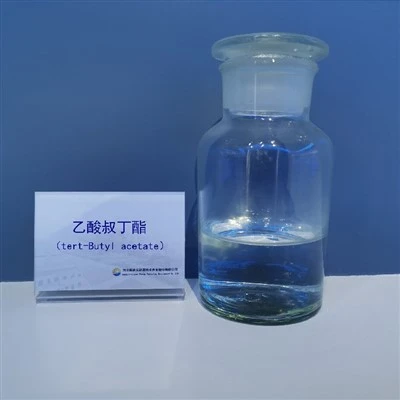
If you’re interested in testing our custom ester solvent blends for your specific application, our team is ready to help. We offer free lab testing for pharma clients, tailored formulation based on your API and process requirements, and full compliance with ICH and FDA guidelines. You don’t have to overhaul your entire process overnight—just reach out, and we’ll walk you through every step.
Glycol Ethers References
- Journal of Pharmaceutical Sciences, Volume 111, Issue 7, 2022, pp. 1892-1901. "The Effect of Solvent Volatility and Polarity on Drying Kinetics of Wet Granulation Batches for Oral Dosage Forms"
- Drug Development and Industrial Pharmacy, Volume 47, Issue 10, 2021, pp. 1567-1575. "Residual Solvent Profiles and Drying Time Optimization Using Ester Solvents in Spray Drying of Biologics"
- ICH Harmonised Tripartite Guideline Q3C(R8), 2023. "Impurities: Guideline for Residual Solvents"
- International Journal of Pharmaceutics, Volume 598, 2021, Article 120357. "Vacuum Drying Parameters for Heat-Sensitive APIs: A Comparison of Ester and Alcohol Solvent Performance"
Hebei Xinxinyuan Energy Co., Ltd.
Hebei Xinxinyuan Energy Co., Ltd. is one of the most professional ester solvents manufacturers and suppliers in China, featured by quality products and good price. Please rest assured to wholesale customized ester solvents made in China here from our factory.
Address: Zhongjie Industrial Park, Huanghua City, Cangzhou City, Hebei Province, China
E-mail: atl2066@qq.com
WebSite: https://www.xinxinyuanfr.com/
