If you’ve ever walked down the aisles of a hardware store, or had to fix a frayed garden hose, a loose cardboard box, or a torn vent duct in a basement, you’ve likely grabbed a roll of duct tape. But if you’re a contractor packing thousands of boxes for a cross-country move, an HVAC technician servicing 50 homes a week, or a school maintenance team keeping campus fixtures intact, you don’t use small, hand-held rolls. You need duct tape jumbo rolls—continuous, wide rolls that cut down on changeovers, reduce waste, and keep projects moving without constant restocking. As a supplier who’s worked with these teams for over a decade, one of the most common questions I get isn’t about strength or adhesive hold—it’s a simple, practical one: “What’s the width of a duct tape jumbo roll?” Duct Tape Jumbo Roll

I wish the answer was just a number, but like most things in industrial materials, it’s a question that ties together use case, industry standards, and real-world on-the-job needs. A jumbo roll’s width isn’t pulled from thin air; it’s calculated to match the specific tasks that heavy-duty users rely on, while balancing material efficiency and cost. Over the years, I’ve seen misinformation spread online—some blogs claim all jumbo rolls are 6 inches wide, others swear 3 inches is the only “industrial” size. Today, I want to break down the science, the standards, and the practicalities that define how wide a duct tape jumbo roll actually is, straight from the supplier’s desk.
First, let’s start with the basics: what makes a roll “jumbo”? A hand-held consumer roll is usually 1 to 2 inches wide, with a 10 to 60 yard length, designed for occasional, small use. A jumbo roll, by contrast, is a bulk roll intended for high-volume, continuous use. For the duct tape industry, the term “jumbo” refers to rolls that are manufactured before being slit into smaller, user-friendly rolls. That means the base roll is much larger than what you’d find on a store shelf, and its width is dictated by how tape is produced on industrial slitting and rewinding machines. These machines have fixed maximum widths, and most standard duct tape jumbo rolls top out at 54 inches in width—this is because that’s the width of the master roll that feeds into the slitter, the standard size used by most North American and international manufacturers. It’s not arbitrary; these master rolls are sized to fit in factory storage racks, move on production line pallets, and work with industrial machinery that processes wide web materials.
Now, when that 54-inch master roll is slit into the jumbo rolls that get sold to industrial users, there are standard widths that meet the needs of the most common industries. Let’s break down the ones we supply most often, and why they matter.
The most versatile and widely used duct tape jumbo roll width is 3 inches. Wait, I know—some of you are nodding, because your team has used 3-inch jumbo rolls for everything from sealing HVAC duct seams to securing wire harnesses in construction. But let’s get specific: a 3-inch jumbo roll (technically, 3.125 inches, to account for the slitting blade’s slight cut) is the workhorse for general industrial and maintenance use. Why 3 inches? Think about the tasks: sealing a 1.5-inch HVAC seam needs enough overlap to create a airtight bond, so a 3-inch width gives 0.75 inches of overlap on each side—more than enough to create a durable seal without wasting extra material. For packing boxes, 3 inches is narrow enough to fit around the edges of a standard corrugated box without overlapping too much, but wide enough to handle heavy loads. We’ve supplied 3-inch jumbo rolls to manufacturing plants that use them to secure machine parts, to event companies that use them to mark floor paths for crowd control, and to postal services that process tens of thousands of packages a day.
Next up is the 6-inch wide duct tape jumbo roll. This is a step up for tasks that need more coverage, less frequent application, or larger surface areas. Where is this used mostly? HVAC techs dealing with large duct runs, roofers patching large areas of flashing, or general contractors wrapping entire framing joints. A 6-inch jumbo roll means techs can cover a 6-inch duct seam in one pass, instead of overlapping two smaller strips of tape—saving time, which is critical when you’re on a rooftop in 90-degree heat, trying to finish a job before it rains. For our roofing customers, 6-inch jumbo rolls reduce the number of rolls they need to carry to a job site, since each roll covers twice the area of a 3-inch roll. We also supply 6-inch rolls to moving companies that are packing extra-large, heavy items like furniture or electronics, where a wider strip of tape provides more holding power and reduces the risk of boxes splitting mid-move.
You might be wondering: why not a wider roll, like 10 inches? That’s a fair question, and it comes down to two key factors: machine capability and handling. Industrial slitting machines can cut wide rolls, but when you get beyond 6 inches, the roll becomes too bulky for most standard dispensers. A jumbo roll is designed to be used in a bulk dispenser that mounts to a wall, a cart, or a tool belt—but if the roll is 10 inches wide, it can’t fit into most of those dispensers, which are sized for standard roll widths. Also, wider rolls mean more tape per roll, but the core (the plastic or cardboard tube in the center) has to be stronger to support the extra weight, which adds cost and makes the roll harder to maneuver. We tested a 8-inch roll a few years ago with a construction client, and they loved the coverage, but their dispensers couldn’t handle it—they had to use a specialized, custom dispenser, which added to their overhead. That’s why 3 and 6 inches have become the standard for most industrial users.
Wait, but what about smaller jumbo rolls, like 2 inches? Do those exist? They do, but they’re niche. We only supply 2-inch jumbo rolls to customers who use them for very specific tasks, like securing small electrical wires, labeling equipment, or repairing small rips in fabric. They’re not true “general use” jumbo rolls, because they don’t offer enough overlap for sealing or heavy-duty bonding, so they make up less than 5% of the jumbo rolls we sell. Another niche size is 4 inches, which is used by some HVAC companies for medium-sized duct seams, but it’s less common than 3 or 6 inches because it falls in an awkward middle ground—too narrow for large seams, too wide for small ones.
Now, here’s something I wish more people knew: the “width” of a duct tape jumbo roll also includes the core diameter, which is often confused with the roll’s overall size. A lot of customers will ask for a “3-inch jumbo roll,” and we have to clarify: that’s the width of the tape itself, not the size of the core. The core of a standard jumbo roll is 3 inches in diameter, which is what fits into dispensers. Some customers will ask for a larger core, like 6 inches, to hold more tape, but that makes the roll too heavy to handle manually, and it requires a custom dispenser. We always advise customers to match the core diameter to their existing equipment, to avoid extra costs.
Another point that’s important for industrial users is the consistency of width. Unlike consumer rolls, which can vary by up to 1/8 of an inch due to hand-slitting, jumbo rolls are slit with precision blades that keep width within 0.005 inches. That consistency is crucial because when you’re applying tape in a continuous process, like on a packing line, a slight variation in width can throw off the alignment of the dispenser, leading to wasted tape or messy seals. We have a quality control team that checks every roll’s width before it ships, because even a 0.01-inch difference can cause problems for a customer running a high-volume operation.
I’ve learned over the years that the best way to figure out the right width for a jumbo roll isn’t just to go by the numbers—it’s to talk to the customer about their specific job. Last year, we worked with a small HVAC company that was using 3-inch rolls for all their work, but they were struggling with large commercial duct runs that required two strips of tape to cover. They tried 6-inch rolls, but their dispensers were only sized for 3-inch rolls. So we worked with them to develop a custom adapter for their dispensers that fits 6-inch jumbo rolls, and now their techs finish jobs 20% faster, with less waste. That’s the kind of solution that comes from understanding not just what a jumbo roll’s width is, but how it’s going to be used in the real world.
Let’s also address a common myth online: that wider jumbo rolls are always better. That’s not true. A wider roll might cover more area, but if you don’t need that extra width, you’re paying for material you’ll never use, and the roll will be heavier to carry. For example, a maintenance team at a hospital that uses tape to secure medical equipment might only need 1-inch wide tape, but they buy jumbo rolls to avoid restocking every week—so they don’t need a 6-inch roll. The key is matching the width to the task at hand.
As a supplier, we also keep up with industry standards to make sure our jumbo rolls meet the needs of the jobs that rely on them. The Industrial Tape and Label Association (ITLA), a trade group that sets standards for tape products, notes that standard duct tape jumbo rolls are available in widths from 2 to 6 inches, with 3 and 6 inches being the most widely adopted for general industrial use. That’s because these sizes balance coverage, equipment compatibility, and cost, which is exactly what our customers tell us matters most.
So, to circle back to the original question: what is the width of a duct tape jumbo roll? It’s not a single number. It’s a range of standard sizes, tailored to the tasks that industrial users depend on, with 3 inches being the most versatile workhorse and 6 inches being the go-to for high-coverage, large-scale jobs. It’s a size that’s dictated by manufacturing capabilities, equipment compatibility, and real-world on-the-job needs, not just random specs.
If you’re a contractor, maintenance manager, or industrial user who’s looking for the right duct tape jumbo roll width for your project, we’re here to help. We work with teams to assess their specific needs, offer custom solutions when standard sizes don’t fit, and provide rolls that are consistent, durable, and designed to keep your projects running smoothly. Whether you need 3-inch rolls for daily maintenance, 6-inch rolls for HVAC or roofing, or a niche size for a specialized task, we can help you find the right fit without overpaying for extra material.
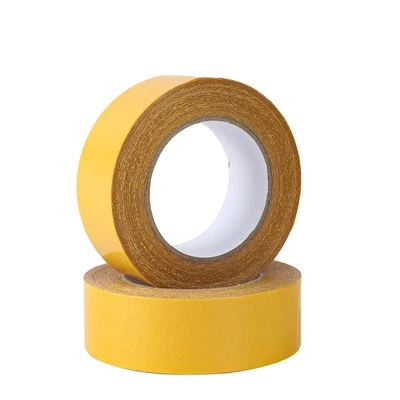
Contact us today to discuss your duct tape jumbo roll needs, and we’ll work with you to find the perfect width, length, and adhesive strength for your projects.
Duct Tape References
- Industrial Tape and Label Association. (2022). Standard Specifications for Industrial Adhesive Tapes. ITLA Technical Report Series.
- Duct Tape Manufacturers Association. (2021). Bulk Roll Duct Tape: Production, Sizing, and Industrial Applications. DMCA Industry Guide.
- National Association of HVAC Contractors. (2023). Best Practices for Duct Sealing: Tape Width and Application Standards. NAHVC Maintenance & Operations Manual.
- Global Supply Chain Association. (2022). Bulk Packaging Materials: Efficiency, Sizing, and Cost-Benefit Analysis for Industrial Users. GSCA Logistics Report.
Yiwu Yubang Adhesive Products Co., Ltd.
As one of the most professional duct tape jumbo roll manufacturers and suppliers in China, we also support custom service. We warmly welcome you to wholesale high quality duct tape jumbo roll made in China here from our factory. If you have any enquiry about cooperation, please feel free to email us.
Address: 4th Floor, No. 17 Gantang West Road, Yiting Town, Yiwu City, Jinhua City
E-mail: salesmanager@yubangtape.com
WebSite: https://www.yubang-tape.com/
