Hey everyone, it’s Mia here, from that power transformer oil tank supplier you might’ve seen around the shop floor lately. Last week I was chatting with a maintenance guy at a local substation, and he dropped this question: “How the hell do we keep the oil level in those big transformer tanks perfect all the time? Seems like a tiny detail, but if it’s off, we’re staring at a huge outage.” Power Transformer Oil Tank

Fair point—most folks don’t think twice about that squishy oil level reading on a transformer’s side, right? But it’s not just “fill it up when it’s low.” When you’re dealing with a unit that’s moving thousands of volts, sitting outside in rain, snow, and 100°F summer heat, that oil level has to stay where it needs to be, no matter what. I’ve spent the last 7 years working with our team designing and building these tanks, and I’ve seen exactly what happens when the level slips too far or gets too high. So let’s break this down like we’re hanging out by the tool bin, no boring tech jargon (well, not too much).
First off, let’s get why the oil level matters in the first place, because that’s the foundation. Transformer oil isn’t just “olive oil for big metal boxes”—it does two non-negotiable jobs. One, it insulates the live windings inside the tank, so current doesn’t arc through the air between parts and blow the whole thing. Two, it cools those windings, because when electricity moves, it creates heat—imagine your phone overheating, but this is enough heat to melt copper if it’s not sucked away.
Here’s the catch: oil expands when it heats up, and shrinks when it cools down. That’s basic physics, but for a transformer, this isn’t a trivial swing. A 500kV transformer might have thousands of gallons of oil. If it heats up from 20°C to 80°C (typical load cycle), that oil expands so much, the pressure inside the tank jumps. Too much pressure, and you get a leak, or even a rupture, which dumps all that insulating oil on the ground (environment nightmare, plus the transformer’s toast). If it cools down and shrinks too much? You pull air into the tank. And that air has moisture in it—moisture ruins insulation, causes corrosion, and can lead to arc faults. So we need a system that lets oil expand when it’s hot, take in air without moisture when it’s cold, and keeps the level locked in the safe zone 24/7.
That’s where the main player comes in: the conservator tank. I can’t tell you how many customers walk in and go, “Wait, there’s a whole tiny tank on top of the big transformer? That’s not just extra metal.” Nope, that’s the level controller’s best friend. Let’s set this up: the main transformer tank holds all the guts (windings, core, oil that does the insulating/cooling). The conservator is a smaller, airtight tank mounted way up top, connected to the main tank with a pipe. The space in the conservator above the oil is filled with air, but it’s dried, moisture-free air.
When the main oil heats up and expands, it flows up that pipe into the conservator. No extra pressure in the main tank, because the conservator’s a bigger volume to catch the expansion. When it cools down, oil flows back from the conservator into the main tank. The level in the conservator rises and falls with the load and temperature—there’s a level gauge on the conservator that maintenance guys check every quarter, simple as reading a stick. But we don’t just leave that air in the conservator open to the atmosphere, because that’s where moisture comes in.
Wait, so how do we keep that air dry? That’s the breather system, and it’s one of the most underrated parts of the whole setup. The conservator connects to a breather can—usually a metal or plastic box full of silica gel, that orange or blue crystal stuff you see in shoe boxes or new electronics. When the main oil cools down, it pulls air from the conservator through the breather. The silica gel soaks up any moisture in that air before it gets into the tank. Once the gel is full of water, it turns pink (if it’s orange to start) or green (if it’s blue), so maintenance guys know to swap it out. We design our conservators and breathers so that even in super humid areas, the moisture never gets past that gel—we’ve tested these in Florida humidity and Arizona desert dryness, works either way.
But hold on, what about transformers that are a little smaller, or maybe in really remote areas where swapping silica gel every year is a pain? We also have sealed conservator systems, or even hermetically sealed tanks for units that don’t want any air at all. Wait, hermetic doesn’t mean airtight forever, right? No, but some of our smaller distribution transformers (the ones on power poles in neighborhoods) have a completely sealed main tank—no conservator, no breather. How does that work? Oh right, we fill them with oil that’s been degassed and dried, so there’s almost no moisture or air left. They have an internal expansion bladder, a rubber or flexible membrane inside the tank that takes up the extra space when oil expands. So when it heats up, the bladder squishes, no extra pressure, and when it cools, the bladder expands to fill the space, so no air ever gets in. No breather needed, no silica gel to swap, which is perfect for places that are hard to reach. I’ve seen these last 20+ years with barely any maintenance, which is a huge win for utilities.
Now, that’s the basic system, but there’s a whole layer of monitoring that keeps the level on point 24/7, not just quarterly checks. The old days were just a float switch in the conservator—if the level got too low, it’d trigger an alarm, so the maintenance crew would drive out and add oil. But now, we have real-time level sensors that send data straight to the substation’s control room. These are usually ultrasonic sensors or pressure sensors mounted on the conservator or main tank. Ultrasonic bounces sound waves off the oil surface and times how long it takes to come back—super accurate, no moving parts to break. Pressure sensors measure the weight of the oil, which translates to level, same thing.
Wait, and here’s a pro tip we learned building our tanks: we add a level interlock, too. So if the level drops too low, or gets too high, the transformer automatically shuts off part of its load, or even trips completely, before anything bad happens. You don’t want to keep running a transformer with too little oil—its windings aren’t insulated or cooled, so heat builds fast. Too high oil? No, that’s way less common, but if you overfill it, when it heats up and expands, you don’t have enough space in the conservator, so oil seeps out through the breather. That’s messy, and you’re wasting good insulating oil, plus it’s a slip hazard for crews. We always advise our customers to leave a 10-15% headroom in the conservator when refilling oil, that’s the sweet spot.
Another thing we deal with all the time: how does oil get checked and topped up safely? You can’t just pour new oil into the conservator willy-nilly. The new oil has to be the exact same type as what’s in the transformer, right? Mixing mineral oil with synthetic oil or different additives ruins the insulation properties. And you have to do it when the transformer is offline, or at least lightly loaded, because if it’s running hot, the oil is expanded, so adding oil when it’s hot will lead to overfilling when it cools. We send our customers a quick guide when they get their tanks, but most utilities have their own crew that’s trained on this—though we’re always happy to walk them through it, since we build these tanks, we know every inch of them.
Wait, what about extreme weather? I mentioned earlier, heat and cold. In places where it drops below freezing in winter, oil gets way thicker, and shrinks a lot more. That’s why we size the conservator exactly for the transformer’s oil volume, and add a heater if the area is super cold. Small heating elements mounted on the conservator or main tank that warm the oil just enough to keep it from getting too thick, so when it shrinks, the flow back into the main tank isn’t blocked. In the desert, where it hits 110°F in summer, we add extra ventilation to the conservator, so the oil doesn’t overheat and expand too much, which reduces the strain on the tank’s seals.
I’ve seen so many mistakes over the years, from customers cutting corners on breathers (skipping silica gel, so moisture gets in, leading to insulation failure) to sizing the conservator too small (boom, rupture in a heatwave). That’s why when we design a tank, we don’t just pull a number off a spec sheet. We calculate the exact oil volume of the transformer, the max and min temperature swing the unit will see, the humidity level of its location, and then size the conservator and breather perfectly for that. No one-size-fits-all here, and that’s what a lot of suppliers skip. We’ve had a customer in Alaska tell us their transformer has been running for 12 years without a single level issue, and that’s because we sized the conservator and added the right heater for their -40°F winters.
Another question I get all the time: do we use any kind of pumps to move oil around? No, almost never. The whole system is gravity and pressure from temperature change. The conservator is mounted higher than the main tank, so oil flows up and down naturally, no motors, no extra parts to fail. That’s the beauty of it—simple, reliable, no electronics to break in a storm. The only electronics are the level sensors and alarms, which are optional, but most utilities add them now for real-time monitoring.
Wait, what about when a transformer is being installed, or moved? That’s a big time for level issues. When you tip a transformer to move it, oil sloshes around, and air can get trapped in the top. So when we ship our tanks, we fill them almost full, with a small air space, and include a vent plug that lets trapped air escape during installation. We also send a tech with every large transformer, or video call them to walk through the installation, so they don’t mess up the level when first filling. I’ve seen a team accidentally trap air in a transformer when installing, which caused overheating within a month—super avoidable, that’s why we emphasize the setup part.
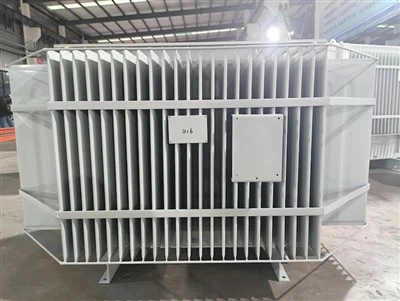
So to wrap this up, the oil level system isn’t some magic trick. It’s a combination of three main parts: a conservator tank that acts as a buffer for expansion and contraction, a breather system that keeps moisture out of the incoming air, and level monitoring that lets you catch issues before they turn into problems. And at our company, we don’t just build the tanks—we tailor each system to the specific unit and its location, because a transformer in the mountains in Colorado has totally different needs than one in the suburbs of Houston.
Pad Mounted Transformer Oil Tank If you’re a utility manager, maintenance crew lead, or even just someone curious about how these big power units work, and you’re dealing with a transformer oil tank that’s having level issues, or you need a new tank built for a project, hit us up. We’ve got engineers on staff who can walk you through sizing conservators, breathers, monitoring systems, whatever you need. No pressure, no confusing sales pitches, just real answers from people who’ve been working with these tanks for years.
References
- IEEE Std C57.12.00, Standard General Requirements for Liquid-Immersed Distribution, Power, and Regulating Transformers
- American Electric Power (AEP) Transformer Maintenance Manual, 2022
- CIGRE Technical Brochure 782, "Transformer Insulation Condition Management"
- National Grid Transformer Oil Handling Guidelines, 2021
- International Electrotechnical Commission (IEC) 60296, Liquid-Filled Transformers—Specifications for Insulating Oils
Nantong Zhihe Electric Co., Ltd.
As one of the most professional power transformer oil tank manufacturers and suppliers in China, we’re featured by quality products and low price. Please rest assured to wholesale cheap power transformer oil tank made in China here from our factory. Customized orders are welcome.
Address: NO.202 Jianghai West Road, Hai’an Town, Hai’an City, Jiangsu Province
E-mail: colt.ntzh@gmail.com
WebSite: https://www.ntzhelectric.com/
